FC Naples beat Sarasota 3-2 to keep its playoff hopes alive, then claimed the eighth seed as Chattanooga joined the postseason field.

FC Naples turned a must-win visit to Sarasota into a 3-2 victory, then secured the eighth and final USL League One playoff spot. The result ended Sarasota Paradise’s postseason hopes and completed the picture for the 2026 season: Charlotte and Omaha finished first and second, while Boise and Madison claimed the other top-four places and home dates in the first round. That narrow margin gives the match significance beyond a single late-season win: its result settled both the final playoff berth and Sarasota’s fate.
The scoreline also captures the pressure on both teams. A 3-2 win means Naples had to recover after Sarasota scored first, then find enough control to protect the result. For a team chasing the last available place, there’s little room to manage a match cautiously once the opponent has taken the lead. Every adjustment has to serve the immediate problem: get back into the game, without opening up the space needed for another concession.
Naples changed shape to unsettle Sarasota
The Wednesday meeting carried a stark consequence: a draw would have eliminated both sides and confirmed the eight-team playoff field. Sarasota entered in strong attacking form, while Naples arrived with five consecutive wins under interim manager Zak Gordon. A sixth straight victory kept Naples in contention. The setup left neither club with much reason to treat a draw as a useful result, and that urgency shaped the contest before either side had scored.
Sarasota made the bolder selection move, shifting Sander Roed from his false No. 9 role into midfield to make room for veteran striker Emiliano Terzaghi. That change altered the balance between linking play and occupying the center of the attack. Roed’s move could give Paradise another presence in midfield, while Terzaghi offered a more conventional target up front. The adjustment helped Paradise score first, but Naples recovered and found a way to win. A tactical choice can create the opening a team wants; it still has to hold up once the opponent adapts.
Goalkeeper Lalo Delgado again provided a platform for Gordon’s tactical choices. From the start of the winning run through the season’s finish, Delgado recorded nearly 2.0 goals prevented, almost twice the total of any other League One goalkeeper. That figure points to an important part of Naples’ late surge: a team can take calculated risks higher up the field when its goalkeeper is turning dangerous chances into saves. It doesn’t mean the structure was safe by itself. It means Delgado helped absorb the cost when Sarasota or another opponent got through.
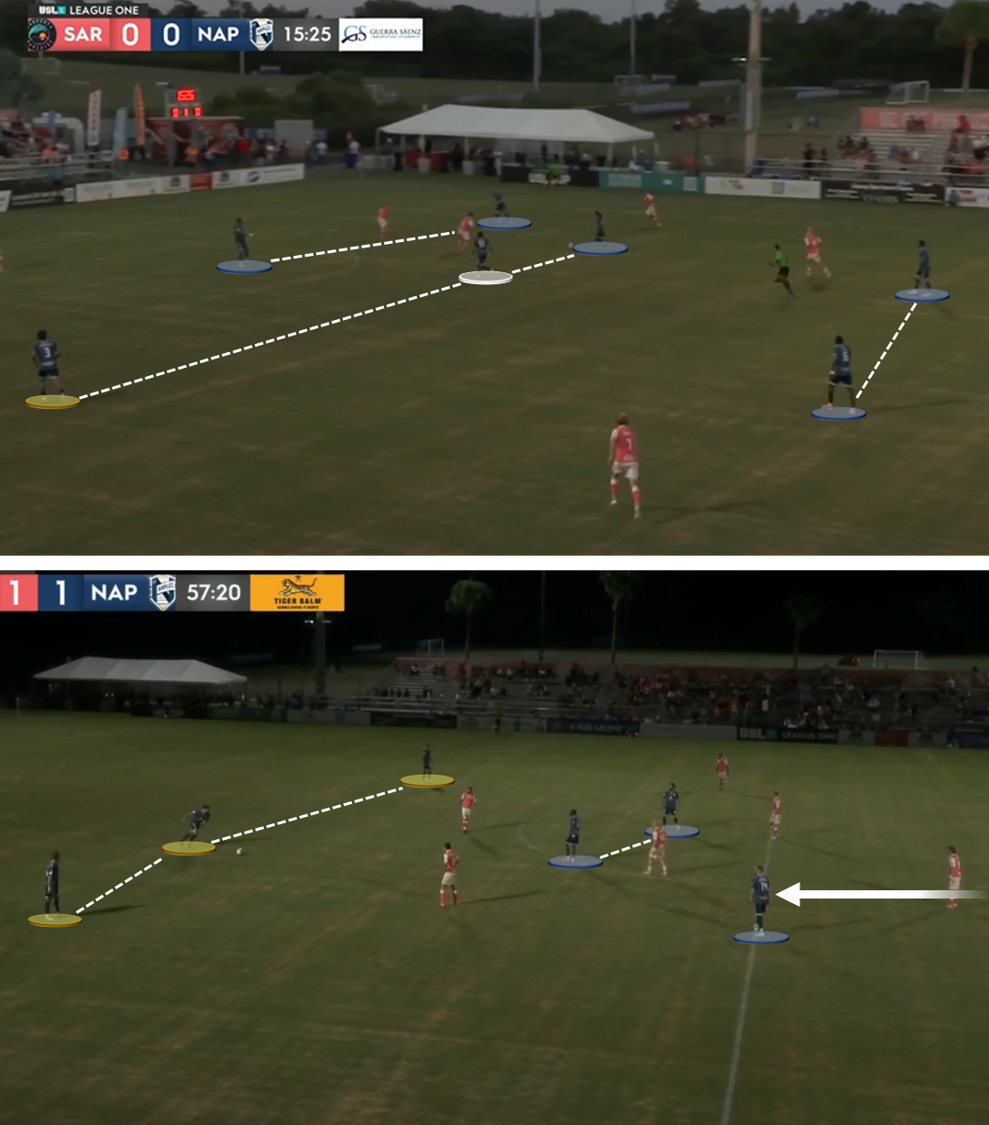
Naples used a 4-2-3-1 in its mid and low blocks, then shifted to a 3-2-3-2 when pressing or building possession. The shape changed with the phase of play, rather than asking the same lineup to defend and attack in identical positions. Left back Julian Cisneros pushed high along the flank while the other three defenders stayed deep. That arrangement gave Naples an extra player advancing on the left while maintaining a three-player base behind the move.
That structure targeted Sarasota’s single-pivot buildup: as the top frame shows, it helped force a turnover that reached right winger Ty Collins. The detail matters because pressing isn’t just a matter of running at the ball. A coordinated press tries to steer the opponent toward a particular pass or area, then close the options around it. Here, the shift in Naples’ shape helped turn pressure into possession and a route forward. One sequence doesn’t explain the whole match, but it shows how Gordon’s side could change its approach without abandoning its defensive cover.
This is more significant than it looks. Naples’ late run wasn’t just a story of momentum; the tactical flexibility gave the team different ways to contest possession, while Delgado’s form offered some insurance when those choices carried risk. The plan still depended on execution. A high left back, a pressing shape and a goalkeeper’s saves can each help, but none guarantees a result on its own.
The playoff field is set
Chattanooga and Naples took the seventh and eighth seeds. Charlotte and Omaha had already locked up the top two positions; Boise and Madison joined them in the top four after winning results on the final weekend. Those four clubs will host first-round matches beginning next weekend. The standings now divide the field into two groups: four teams with home dates and four that reached the postseason without that advantage.
Home dates matter because the top four earned them through their position in the table, but they don’t settle the matches in advance. The final weekend’s results secured the order and completed the bracket; the playoffs will test whether those regular-season advantages carry into knockout games. For Naples, qualifying as the eighth seed means the team gets another match to extend a run that has already produced six consecutive wins. The challenge will be sustaining the level that made that streak possible against a higher-seeded opponent.
What the finish says about both campaigns
Naples’ late-season run shows how a stable last line can give a team room to adjust its approach elsewhere. The team’s goalkeeping, formation changes and recovery after conceding all fed into a result that mattered at the table. If you’re working in this space, the useful takeaway is how those pieces fit together: tactical flexibility has more value when the team behind it can limit the damage from the chances it gives up.
For Sarasota, the defeat ended a campaign that had featured one of the division’s most productive attacks, but the final standings left no margin for a draw or a loss. That’s the hard edge of a playoff race: a strong attack can keep a team in the contest, yet the last result still determines whether the season continues. Paradise scored first, but couldn’t turn that lead into the point or win it needed.
(And this is the part most people overlook.) The final standings tell who advanced; they don’t erase the difference between a season’s attacking promise and its finish. Sarasota had shown it could score, while Naples arrived with a five-win streak and then extended it under pressure. For Naples, the playoff place is earned. For Sarasota, the season ends with a clear reminder that a late opportunity counts only if the team can convert it.
Now the field is set. The next round will show whether Naples’ adaptability and recent form can travel into the postseason, and whether the top four can make their home dates count. A final-place qualifier has little time to settle in. The margin for error is thin.
Discussion
Sign in to join the discussion.