St. Louis City claimed the 2026 U.S. Open Cup on penalties after a bruising 0-0 final, where pressing, tight marking and tactical adjustments defined the match.
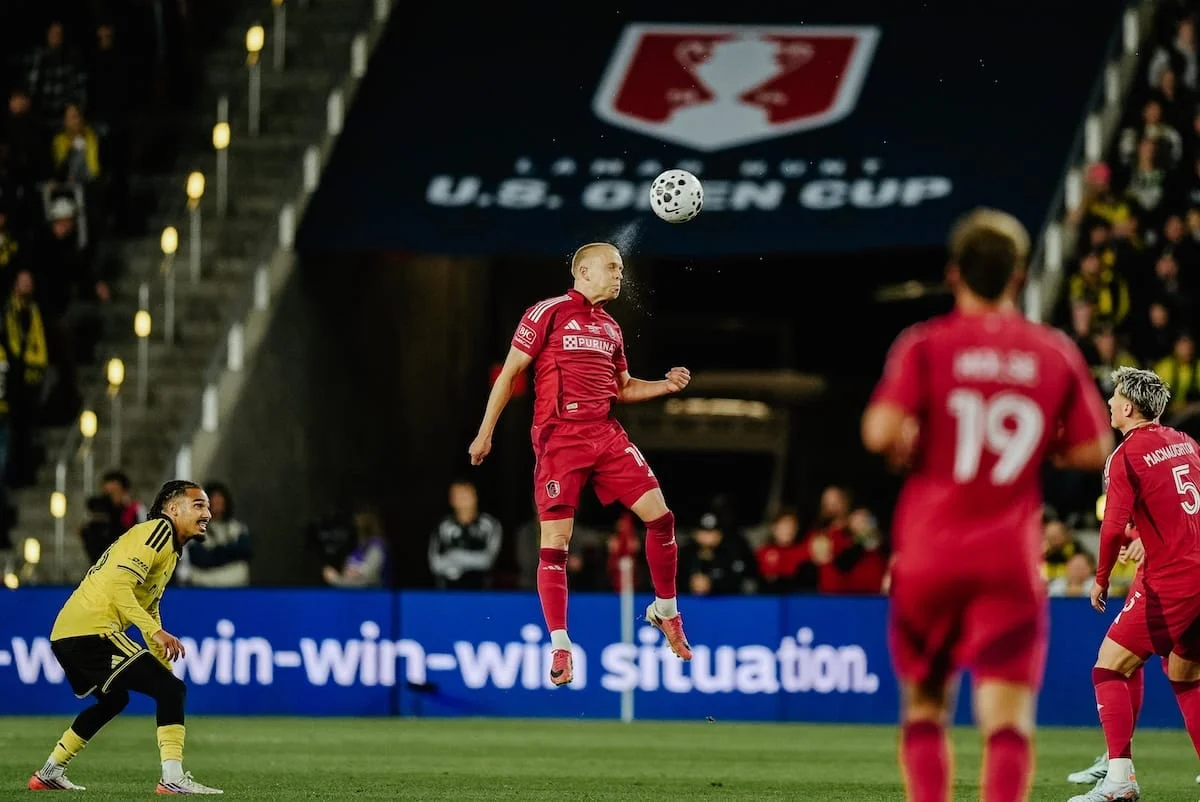
St. Louis City’s 2026 U.S. Open Cup win came down to penalties, but the final’s defining feature was the contest before the shootout: a tense, physical battle between two teams intent on pressing their way through. Neither side found a goal in 120 minutes, and St. Louis eventually beat the Columbus Crew from the spot on Wednesday night, in front of a sold-out crowd of more than 20,000 at Scotts Miracle-Gro Field. The scoreline captures the finish; it doesn’t explain how much of the match was spent trying to disrupt the opponent’s route forward.
The 111th edition began its qualifying rounds in fall 2025 and ended with a final that matched the tournament’s appetite for drama. St. Louis manager Yoann Damet left with a trophy, while the match offered a clear tactical story: both teams pressed, but their different shapes changed which side could play through that pressure. Here’s the thing: the shootout decided the winner, yet the game’s texture came from the adjustments made before either team reached the penalty spot.
A final shaped by pressure
Both sides came out looking to play through pressure. Given their coaches’ ties to former Columbus manager Wilfried Nancy, fluid possession might have been the expectation. Instead, tight marking, assertive pressing and a quick whistle turned the match into a scrappy affair. That combination narrowed the time and space available to build attacks, making each attempt to play through midfield a test of control as well as ambition.
The atmosphere made the stakes tangible. Columbus’ Nordecke filled one end with yellow, while a contingent of St. Louis supporters brought a red wave into the stadium. CBS’s broadcast added drone, referee and fan cameras, drawing viewers closer to the action. The production matched the occasion, but the tension came from the pitch: pressure forced hurried choices, and the physical contest kept the match from settling into a predictable rhythm.
St. Louis applied the more aggressive press. Its pressure ranks second in MLS for passes allowed per defensive action, yet Columbus handled it more effectively during the final. In St. Louis’ off-ball 5-2-3, midfielders Chris Durkin and Daniel Edelman tracked the Crew’s central pivot, trying to restrict the link between defense and attack. Columbus still found ways to build through the lines. That resistance matters: a press can be forceful and still fail to dictate where the opponent plays.
The Crew’s slightly deeper line of confrontation within their own 5-2-3 produced better results. They stayed compact while pressing, tempting St. Louis into risky passes and steering play toward areas they could control. St. Louis often answered with longer balls from the back; its most effective spells came when the team moved together through its possession shape. A longer pass could relieve immediate pressure, but it also asked St. Louis to reconnect as a unit if it wanted to keep the attack alive.
That difference helps explain why the match could feel like a tactical contest without producing a goal. Each team tried to make the other’s preferred route uncomfortable, and neither found a consistent way to turn pressure into a decisive opening. The numbers here are underwhelming for anyone expecting an open attacking showcase. The battle itself was the spectacle.
How St. Louis found routes through
Damet’s approach was to bend Columbus’ front line while limiting the pivot’s ability to support the press. “We have different structures that I like for different reasons, whether because it gives us a numerical advantage or it gives us a positional advantage and makes things difficult in terms of defensive references for the opposition,” he told Backheeled last week. The point is practical: changing a team’s shape can alter the decisions its opponents have to make, even if the change doesn’t produce an immediate shot or goal.
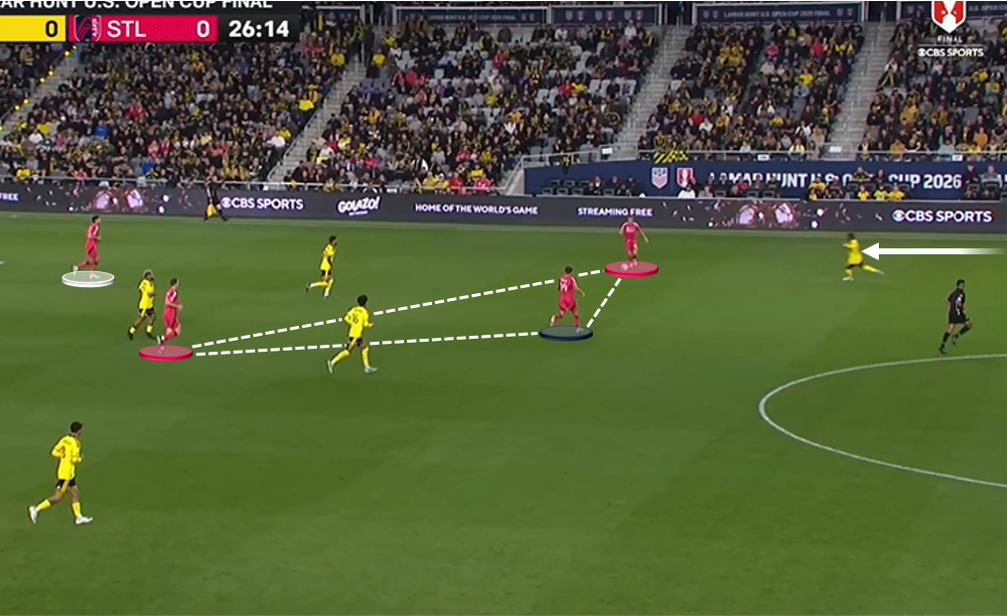
The sequence shown above illustrates that flexibility. Edelman, in red, receives near the left touchline as the nearest Columbus winger stays occupied by center back Dante Polvara. Durkin holds a central position, helping St. Louis maintain a point of connection through midfield. Conrad Wallem, usually tucked inside from the right, has pushed higher and drawn a marker out of the frame. Carlo Holse drops into the space to complete the passing triangle and help carry possession through the lines.
That movement gives St. Louis options at different heights: a player near the ball, a central connection and a teammate dropping into the space the shape has opened. The image is a useful reminder that possession isn’t simply a matter of passing more often. Players have to occupy positions that give the next pass somewhere to go, while their movement can pull defenders away from those routes. In a match defined by pressure, creating that extra connection can be the difference between being forced backward and advancing together.
But there’s a limit to what one sequence can prove. It shows a route through Columbus’ pressure, not that St. Louis controlled the final or repeatedly created chances from this pattern. And this is the part most people overlook: tactical flexibility can help a team survive an opponent’s plan without giving it a reliable way to score. The final stayed goalless, so the shapes explain how St. Louis competed, not why a goal failed to arrive.
What the final says about the win
That tactical variety couldn’t break the deadlock, but it helped St. Louis withstand Columbus’ pressure and reach the shootout. The final’s lasting impression is less about fluent attacking than about the small adjustments that kept each side competing—and St. Louis’ composure when the trophy came down to penalties. This is more significant than it looks: cup finals are often remembered through one decisive moment, but the work that keeps a team in contention happens across the minutes before it.
For St. Louis, the title came through a combination of pressing, positional changes and the ability to keep responding when Columbus found ways through. The result doesn’t erase the Crew’s better spells, and a goalless match can’t settle every question about which side’s approach was more effective. It does show that St. Louis’ plan gave it enough ways to stay in the contest until the outcome shifted to penalties. Not a flowing final. A hard one.
If you’re working in this space, the useful takeaway is that a pressing system’s reputation tells only part of the story; the opponent’s shape and ability to find connections matter just as much. For supporters, the conclusion is simpler: St. Louis lifted the cup after a final that demanded patience and nerve, with its tactical work setting the stage for the shootout. That said, the trophy is the clearest measure of the night. Columbus’ resistance is part of the story too.
Discussion
Sign in to join the discussion.