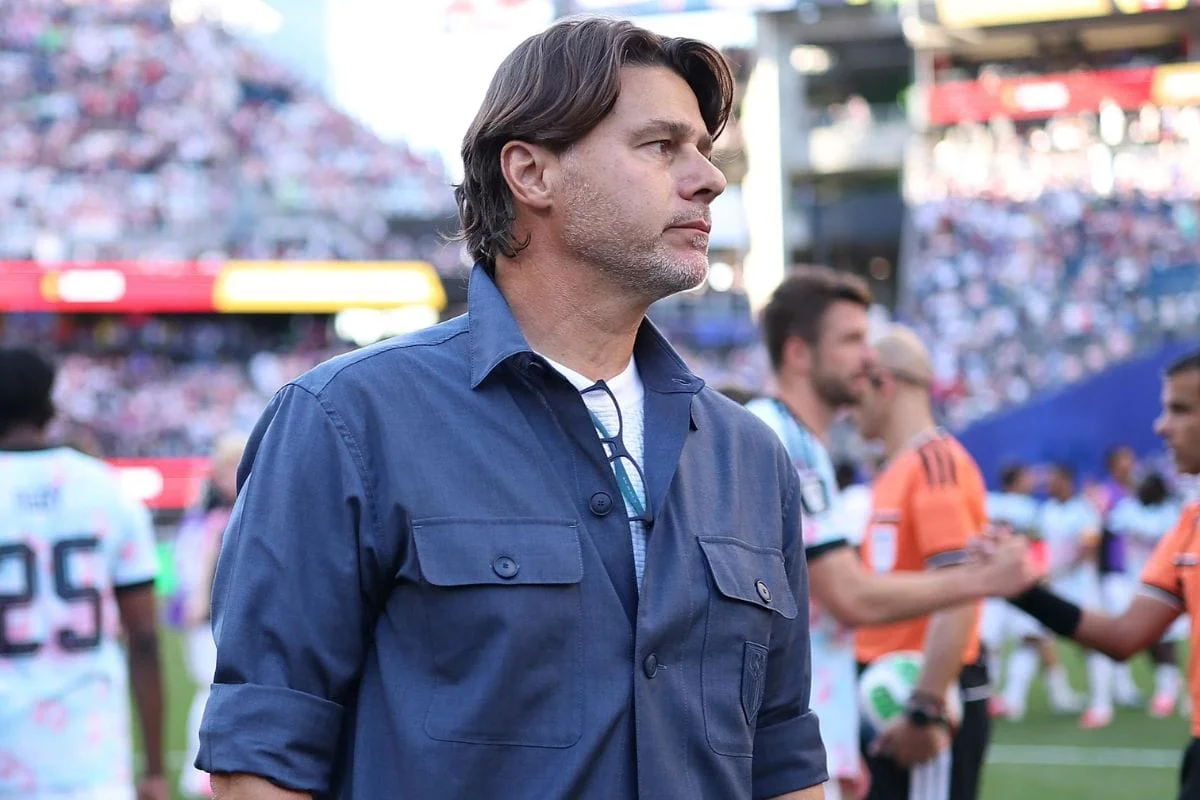
Mauricio Pochettino's move to Manchester United ends his USMNT tenure early and puts U.S. Soccer's big-money coaching bet under scrutiny.
The Federation Opens the Checkbook
U.S. Soccer has made it clear it's willing to find money and spend it. Over the past few years, its fundraising has grown to fund grassroots development and the senior national teams. Eight-figure investments from Michele Kang and Arthur Blank came in. A state-of-the-art training center went up in Georgia. And the federation landed two of the sport's most recognizable coaches, Emma Hayes for the women's team and Mauricio Pochettino for the men's.
That's a different posture from a federation that treats every dollar as a problem to be rationed. Organizations in this position often spend heavily on visible hires because a famous name is easier to announce, and easier to sell to donors, than a multi-year plan for youth pipelines or coaching education. Here's the thing: a spending spree is only as impressive as what it buys. The announcement is the easy part. Sustaining a program around the hire is the hard part, and it's where most of these stories get murky.
A Pricey Hire Without a Long Run
Pochettino didn't come cheap. His U.S. Soccer salary paid him more than $5 million across just the first seven months of his tenure. He then re-upped after this summer's World Cup, only to leave for Manchester United. That makes the timing of the exit the real surprise, even if the move itself was not. Still, I'd argue the timing is the more revealing detail. A departure after a renewal reads very differently from a quiet exit after a poor run, and the federation now has to explain why a second commitment didn't hold.
Pochettino remains one of the biggest names in the game, and Manchester United, for all its recent struggles, is one of its biggest clubs. He also never hid his interest in leaving. Before the World Cup, he told the BBC in December that he missed the Premier League. "The Premier League is the best in the world. Of course I miss it," he said. "I am so happy in the USA, but I am always thinking about returning one day." In the weeks before the tournament, he didn't deny that his representatives had talked with AC Milan about its managerial vacancy. Coaches at his level tend to measure themselves against the top of the sport, and the Premier League sits near that peak. A national team job, however prestigious, is rarely the final stop for someone who has managed in England's top flight.
He also tried to soften the blow. Speaking before the USMNT's first camp of the 2030 World Cup cycle, he framed the new four-year deal as a different kind of commitment. "Now it's a four-year contract, it's different," he said. "We can next season lose the Copa America, or the Gold Cup, and they're not happy with us, they can sack us."
He went on: "Or we can say 'OK, it's not the way that we think.' Four years is different. Maybe now if someone calls in the future, it's a different type (of situation). We are excited, we are thinking to spend four years, to the next World Cup. But now it's a long period."
Notice the hedging. Not a promise, not a rejection.
Read that last quote twice. It's a coach trying to turn a loyalty question into a contract question, and the distinction matters more than he lets on. Four years on paper is a promise of stability. Whether it was a promise he fully intended to keep is a separate matter, and his own words suggest he hadn't ruled out a call from someone else.
Was the Money Well Spent?
Two years in, the question is whether the sourcing and spending were worth it. My read is that the financial downside was limited. Part of Pochettino's pay, on both his initial deal and his new contract, was financed by contributions from billionaire Ken Griffin. That means the federation didn't have to absorb the full cost alone, and it's unclear that Griffin's gift would have gone to another U.S. Soccer project if the coaching hire hadn't happened.
I'd be careful about calling that a free lunch, though. Money earmarked for one purpose is still money the federation can't redirect in the same way, and large private gifts usually carry expectations of their own. Still, the structure is a reasonable one for an organization that needs high-profile hires but doesn't want to bet its whole budget on a single name.
That doesn't settle the sporting question, though. Here's the thing: the federation's real return on a head coach isn't measured only in trophies or a clean exit. It's measured in whether the investment built something durable, and a manager who leaves after two years with an eye on a bigger job makes that harder to judge. Measuring a national team coach is also harder than measuring a club manager. Club managers get league tables every week. National team coaches get a handful of matches between tournaments, which means a two-year window can look productive or empty depending on which friendlies and qualifiers you choose to highlight.
And yet, the appeal of the hire is easy to see. In American soccer, few things attract philanthropic attention like a senior national team coach. Pochettino gave U.S. Soccer a marquee name, and that alone was a return the federation could point to. If you're working in sports marketing or running a federation's commercial side, that's the lesson you'll take from this. Visibility is an asset you can book, but it depreciates fast when the results don't back it up.
What Comes Next for U.S. Soccer
The immediate test is the succession. A federation that moves quickly to replace a coach can signal confidence, while one that drifts can look like it's still searching for its own direction. That's a judgment call, and I won't pretend it's obvious from the outside. The sporting record is the weak link in this story, and it's the part I'd push back on hardest.
Here's what I'd watch. First, whether the replacement is chosen for the four-year cycle or as a stopgap. Second, whether the money keeps flowing toward grassroots development the way the fundraising pitch promised. That second point is where the real story sits, because a federation's donor base tends to care more about the institution than about any one coach. Those donors will help decide whether this model repeats.
Similar systems typically face the same test. A famous hire buys attention, but durable progress depends on what the structure looks like after the headline fades. U.S. Soccer has shown it can raise money and attract names. What it hasn't yet shown is that those two things add up to a program that outlasts the people it hires.


Discussion
Sign in to join the discussion.