Tom Ballantyne went from night shifts at a supermarket to coaching David Silva in Hong Kong. His rise shows what saying yes to every opportunity can build.
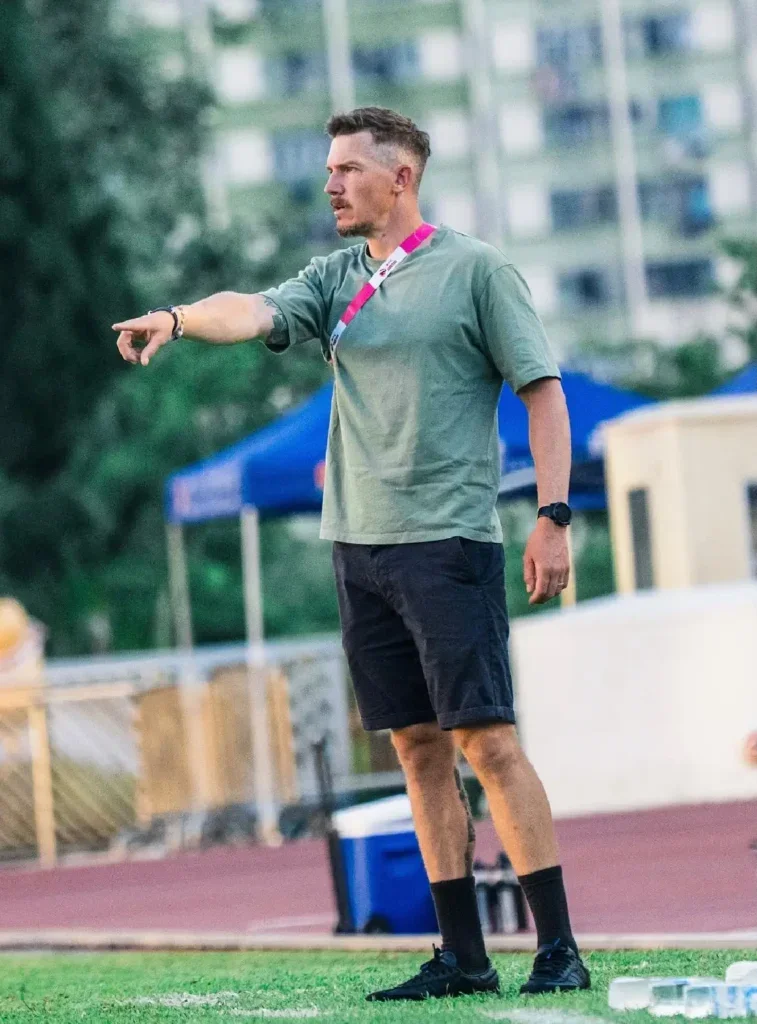
Tom Ballantyne got the call while watching his son play in a junior football tournament. Could he interview for a head coaching job in Hong Kong in about 90 minutes? He was more than an hour from home. He told his wife to find a lift home for the kids, jumped in the car, changed shirts somewhere along the way, and made the interview. A follow-up came the next day. Barely a week later he was on a plane.
That's a fast turnaround for any coach. For Ballantyne, it landed him in charge of Supreme Sha Tin and, within weeks, in the same dressing room as one of the finest midfielders in Premier League history.
A guest spell that made global headlines
Sha Tin's match against HK Rangers on November 7 drew attention well beyond Hong Kong. David Silva came out of retirement for a one-game guest stint and finished the afternoon by scoring from the penalty spot. Ballantyne says the idea wasn't entirely new to him. "I knew it was gonna happen before I took the role," he said.
He was still surprised by the scale of it. "So I was semi-prepared, but not quite prepared for how big the occasion ended up being, which was incredible for the club."
The coach admits there were moments he had to stop and take in who was standing next to him. "It was a pinch-me moment a couple of times, but to be fair, he was a really humble guy, trained really well, played the game really well and was trying to help the young players on the field."
Silva spent a decade at Manchester City under Roberto Mancini, Manuel Pellegrini and Pep Guardiola before closing his career at Real Sociedad. Four Premier League titles and a World Cup winner's medal don't disappear easily, but he had been away from the game for more than three years. The natural question was whether the touch was still there.
Ballantyne's answer was blunt. "His mind was working probably two, three steps ahead of most of the people at training. He was giving out lots of information. And there was one little moment where he's received the ball, turned on the inside, and our striker's just taken off and he's dinked the ball over two people with the perfect amount of back spin that he's run through and finished it in training."
The reaction from the squad said plenty. "And everyone kinda just looked at him. It was one of those okay, yeah. He is still there. This guy's pretty handy."
Ballantyne didn't get much time to pick Silva's brain tactically. The stint was brief. Still, the door appears open. "I think there are ongoing conversations," Ballantyne said. "But above my pay grade!"
He's more definite about the broader idea. "I think it could definitely happen again for us. There's definitely talks with how successful it was and how well the venture happened and the amount of interest it garnered across the globe. It's definitely something that'd be on the radar again, from my understanding."
His reasoning is commercial as much as sporting. Guest appearances put a club back on the front pages, and that kind of exposure is hard to buy. Whether it becomes a pattern will depend on the calendar and the player, but Ballantyne clearly sees it as a model worth repeating.
The long road to a Hong Kong dugout
A few years ago, sitting in a Hong Kong dugout while a Spanish World Cup winner warmed up would have sounded implausible even to Ballantyne. A serious knee injury ended his playing career early and pushed him toward coaching. The 41-year-old backpacked around Australia before finding work in the English system with Aston Villa, Cardiff City and Cheltenham Town.
The coaching roles didn't pay the bills on their own. He worked nights stacking shelves in a supermarket to cover the rent.
"I wanted to coach as much as I possibly could," he said. "So to do that, the only job I could find that would allow me to coach full time during a day and still be able to make enough to pay the rent was stacking shelves in the supermarket three nights a week."
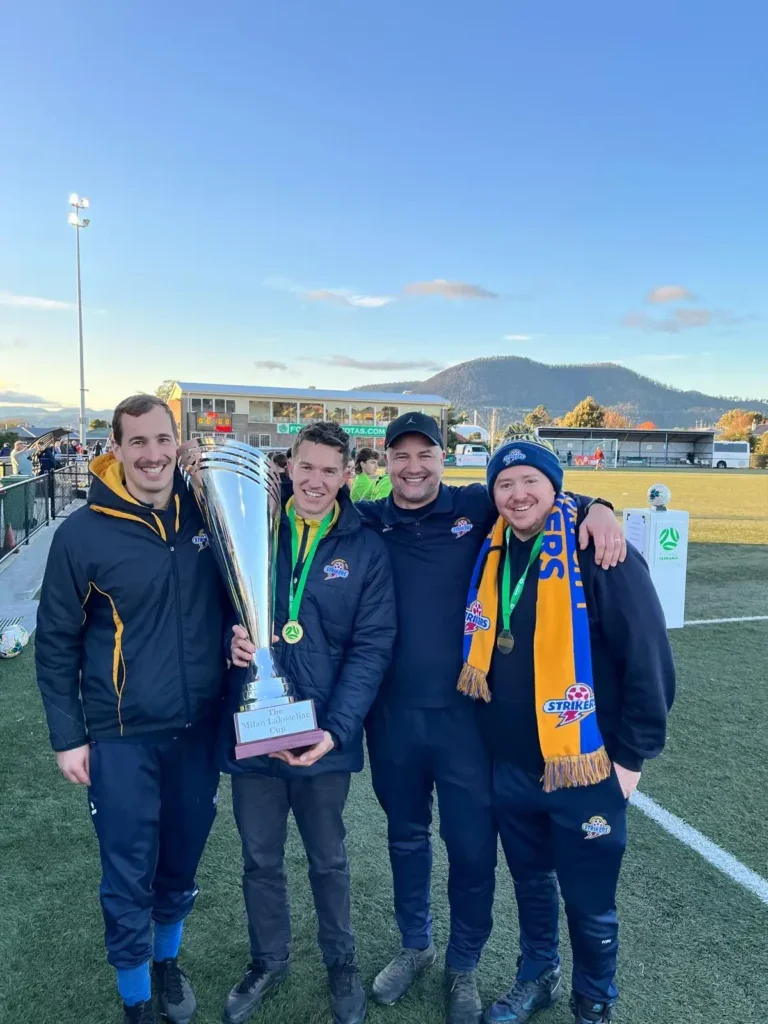
The schedule was punishing. "So I worked three nights a week, generally midweek so I could coach over the weekend as well. And I'd quite often go a few days where it'll be very, very minimal sleep, sometimes an hour."
A typical stretch looked like this: "I'd go home, have an hour's kip, and then jump in a car and drive to Birmingham and go and do a session for Villa and then jump back in the car, drive somewhere else, go to Cardiff, do another session, then go back to work that night again."
That's a lot of miles and very little rest. It also explains his approach to opportunity. He doesn't wait for the perfect offer. He builds a life that can absorb whatever comes next.
"Opportunities don't come around all the time. You have to be in a position to say yes. Football's one of those opportunities. You have to be in the right place at the right time. Sometimes you have to be the right person. And when the opportunity comes, I wanted to be in a position where I could always say yes."
He was willing to learn for free if that's what it took. "If that meant watching someone's session, I went and watched lots of football sessions behind closed doors, rang coaches up: 'Can I come and watch, kind of pick your cones up?'"
Offered a chance to coach one of England's national disability teams, based at Chelsea's Cobham facility, Ballantyne chose a different path. He moved halfway around the world to take a role with the Adelaide United academy. His wife is Australian, and after sorting a visa "quite quickly," the family headed south at the end of 2011.
Fifteen years of building in Australia
Ballantyne admits to a mild regret about never finding out what might have happened had he stayed in the UK. But he has spent the 15 years since honing his craft across Australia's NPL system and has no real complaints about the trade-off.
"I've had great experiences across Australia. They've all made me a better coach. I've probably coached over six hundred, seven hundred senior games of football in Australia. And I've got two beautiful kids."
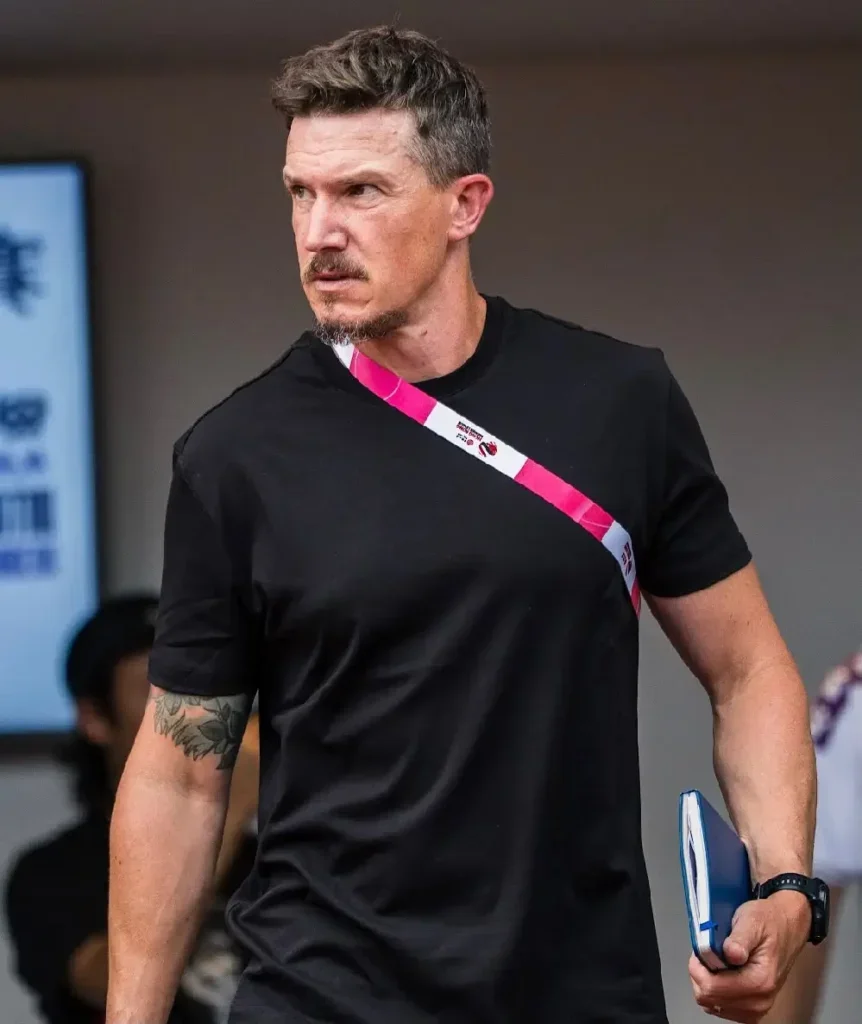
He has reflected on the forks in the road. "Do those sliding doors moments happen if I went the other way instead of the way I'd done? So you know in hindsight you go, maybe, but I don't regret any of them. It's been an amazing experience and an amazing journey to get to where I am."
His path took him through South Australia's state program, school teams, a move to Queensland and then Tasmania. The Tasmanian chapter is the one that stands out. He spent five years at Devonport City and won trophies with both the men's and women's sides.
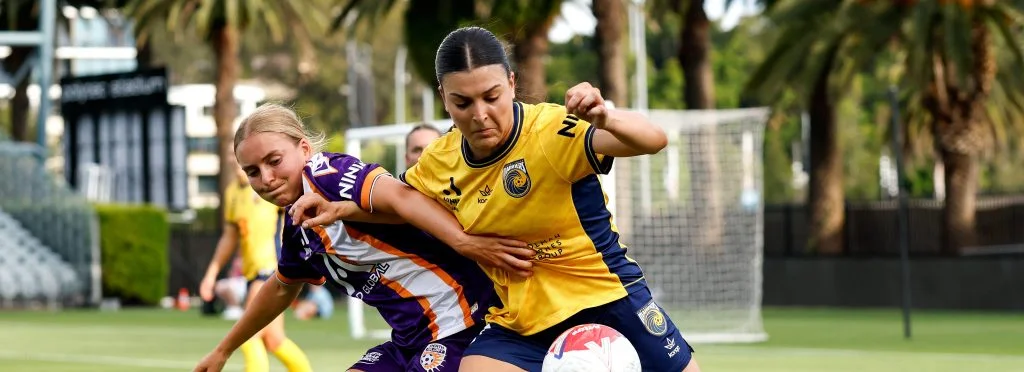
When he left in September, he was the most successful coach in the club's history. His record includes two NPL Tasmania titles, three Women's Super League titles and a 95% win ratio with the women's team across three seasons. Those numbers are hard to argue with, and they're the reason a Hong Kong club came calling.
Ballantyne says the thing that struck him most about Australia was the sporting culture. "Probably the biggest thing that surprised me when I got to Australia was how well organised things were and the winning mentality of Australian sport in general. And that's set me in good stead moving forward."
He contrasts English football culture, where "everything's football and only football," with Australia's multi-code environment. In his view, the professional attitude carries across codes, and that transferable mindset has shaped how he works. Each state also has its own football identity, and he's had to learn each one. "It's been really good as well to get to the point where I'm here where coming in, it's not been, 'my God, how does this work?' I've been able to just roll with the punches and make things happen."
Adjusting to Hong Kong
Six weeks into the job, Ballantyne is still settling in. He left his family behind for now and is focused on the work in front of him. Hong Kong's top flight is fully professional, and he places it "somewhere between the A-League and the Australian Championship."
The climate is the first thing he had to adjust to. "It's hot, so we have to just manage how we have drinks breaks, and where the breaks are in sessions and much more conscious thought in how I have to plan and adapt to sessions now."

The language gap is another. He sometimes works through a translator and has built pauses into his sessions to make sure everyone keeps up. Still, the core of the game hasn't changed. "But overall, football's football, you know, there's still a goal on either end of the pitch and the ball's still round. Still 11 blokes who play it!"
He doesn't see the adjustments as new territory. "Those adaptations aren't something that are new to me. I've had to learn how to do across different states and across different parts of the world."
Longer term, he isn't shy about his ambitions. "I've enjoyed getting to where I am. At some point in time, I'm sure someone will probably tell me 'no, you can't go any further', and I'll do my best to find a way around that."
What keeps him going is the craft itself. "I love the game, I love coaching, I love the ideas of methodologies and philosophies. Those things have, you know, driven me for years and years and years and given me sleepless nights about how I solve problems on football fields. And that's my drive. So the longer I can keep learning and keep progressing myself as a coach, you know, opportunities will come."
He's also clear that a return to Australia remains possible. He is now a fully-fledged Australian citizen, and he's open to wherever the next step leads. "If it goes well and someone notices me back in Australia, brilliant, fantastic. If someone notices me somewhere else here in Hong Kong or across Asia, fantastic."
"But right now I'm really focused on what we're doing here."
That focus is the real lesson in his story. Ballantyne's rise has come from answering the phone, saying yes quickly and making the logistics work afterward. The next test is whether a club in Hong Kong can turn a famous one-game guest appearance into a lasting run of results. If it does, expect more calls like the one he took at a junior tournament.
Discussion
Sign in to join the discussion.